RX3 Fork Maintenance
This tutorial, as the name implies, addresses fork maintenance. We stock all parts for the forks, so whatever you need, feel free to call us at and we’ll ship whatever you want immediately.
The most common problem for any motorcycle’s forks would almost certainly be leaking fork seals, and in this tutorial, we’ll show you how to get to and replace a fork seal on the RX3.
Some people change their fork oil periodically, but the labor involved is fairly significant and we don’t recommend changing the fork oil if you are satisfied with the front suspension or if you don’t have leaks.
Some people like to raise the forks in the fork yokes to change ride and handling characteristics, but we don’t recommend that.
Finally, you may wish to use a higher viscosity fork oil to stiffen the front suspension; this maintenance tutorial will show you how to drain the oil and replace it with a higher viscosity oil.
Changing the Fork Oil
The first step in working on the forks is to remove the front wheel. You can learn how to do that in our front wheel removal maintenance tutorial. You will need to get the front wheel off the ground to do this.
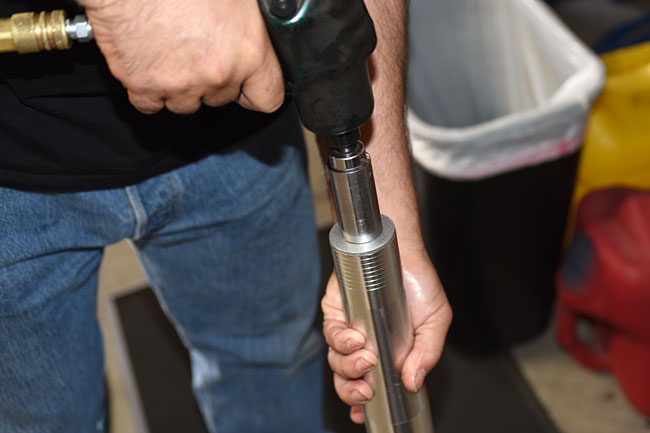
After the front wheel has been removed, many people will loosen the fork cap (but just loosen the cap; do not remove it yet). We advise loosening the upper fork yoke pinch bolts first if you want to do this. Other folks like to loosen and remove the fork cap after the fork has been removed from the motorcycle (you can do this if you have an impact wrench, but it is difficult to do without an impact wrench once the fork is off the motorcycle).
The next step is to remove the speedometer cable from the right fork leg (if you are removing the right fork leg). There’s a composite clamp that secures it. Unscrew the clamp screw and detach the speedometer cable from the fork leg.
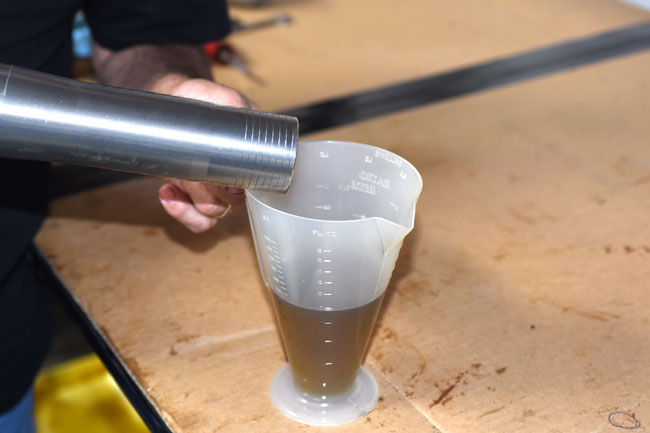
Empty the fork oil into a suitable container for future disposal.
Each fork leg contains 330 cc (or 11.2 US fluid ounces). The fork oil that comes from the factory is a fairly light oil, which provides a comfortable ride. At 210 lbs, I’m what some folks would call a full-figured rider, and I like the ride the RX3 provides as it comes from the factory. Some people want a stiffer ride if they wish to ride the motorcycle more aggressively in the rough stuff. You can stiffen the RX3’s front suspension by using a heavier weight fork oil.
At this point, if your fork seals are good (i.e., they were not leaking) and the only reason you took the forks apart was to change the fork oil, repeat the above process for the opposite fork. Reassemble the forks in the same manner as they were disassembled, leaving the fork caps loose so that you can add new fork oil. Add 11.2 ounces to each fork. We advise using a funnel.
CSC stocks fork oils in various weights. If you wish to stiffen your front suspension with a heavier fork oil, give us a call at . Ask to speak with our suspension specialist and review your needs with him. We’ll get you dialed in with the fork oil that will best meet your needs.
Repairing a Leaking Fork Seal
The other common fork maintenance action is repairing a leaking fork seal. If the fork seal leaks because it was damaged by grit or some other attributable cause, you probably need to only replace the leaking seal. If the seal started leaking due to age-induced degradation, it’s a good idea to replace the seals on both sides of the forks. If one leaked due to age-induced degradation, the other is likely to start leaking soon.
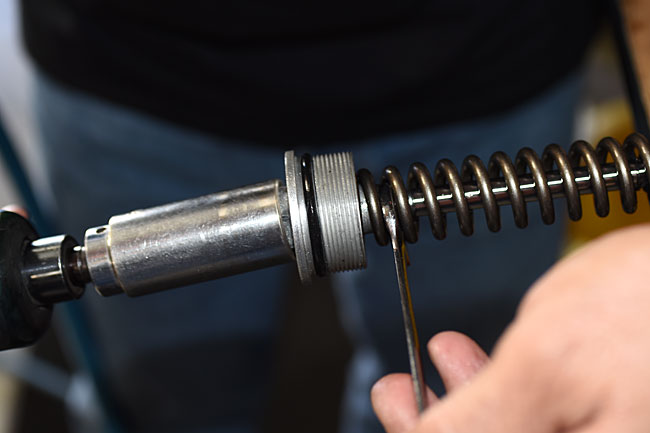
Put a wrench on the bolt head inside the fork spring, and unscrew the fork cap from the fork rod that runs though the center of the fork spring.
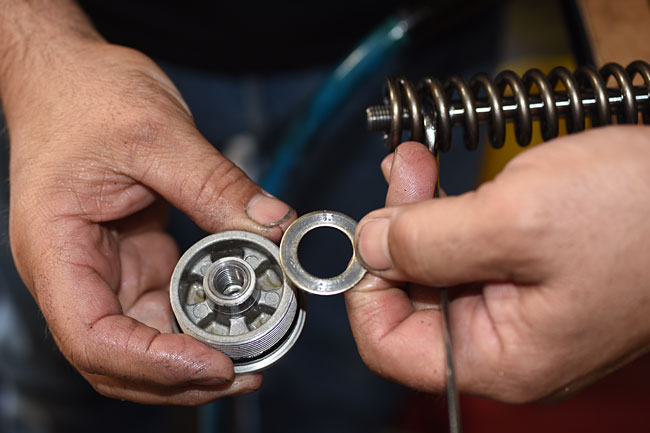
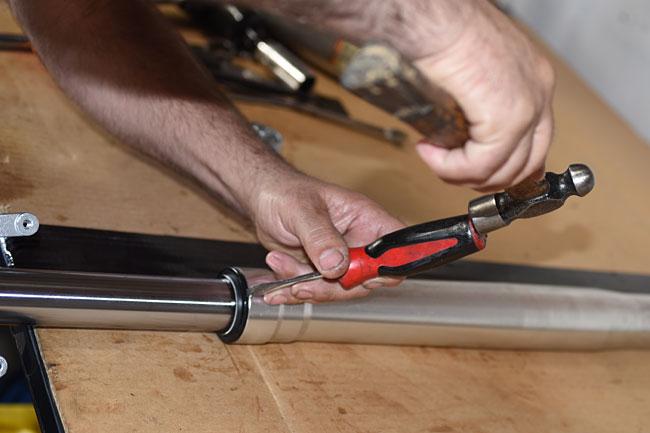
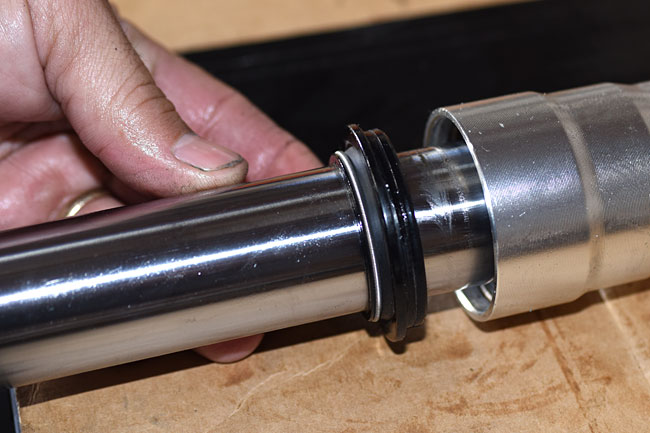
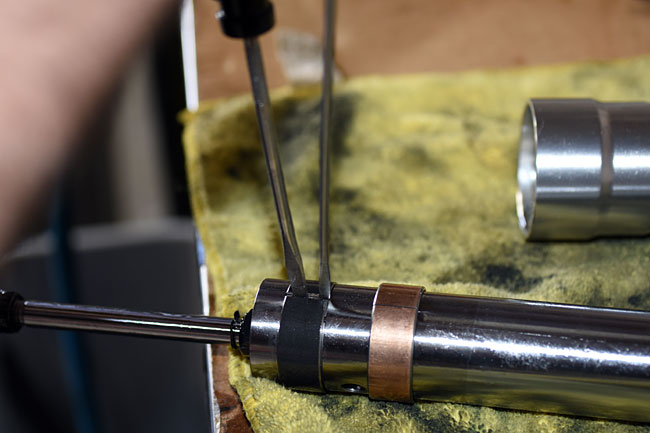
After removing the fork seal and the dust seal, examine both carefully for any cuts, tears, or degradation. If there’s even a hint of damage, replace the defective part. You should also examine the fork lower (which is the part that slides through the dust seal and the fork seal). If there are any scratches, gouges, or surface imperfections on the portion of the fork lower that slides through the seals, you need to either polish the imperfections out or replace the fork lower. If you don’t, you’ll just create another leak.
Assembly is the opposite of the disassembly procedure. After you’ve reassembled the forks, make sure all fasteners are tightened in accordance with the torque table in the CSC RX3 Service Manual torque specification table.
There’s a fair amount of work involved in fork repair (this is one of our longer maintenance tutorials), but it’s a lot less expensive doing it yourself. And my guess is you’ll reach the same conclusion I have when working on these motorcycles. We’ve posted 10 or 11 maintenance tutorials now, and one of the things that has impressed me greatly with the RX3 is just how fine a motorcycle it is. The quality of the internal parts is just awesome. I used to run factories and machine shops making high performance military aircraft and weapons systems, and the workmanship exhibited in the RX3 is every bit as good as what we built for the US Department of Defense.
Like always, when you finish servicing your motorcycle, go for a ride. You’ll feel better, secure in the knowledge that your forks were serviced correctly.
RX3 Fork Maintenance
RX3 Cyclone Fork Maintenance